Pl. CXXX
The Birds · Plate CXXX
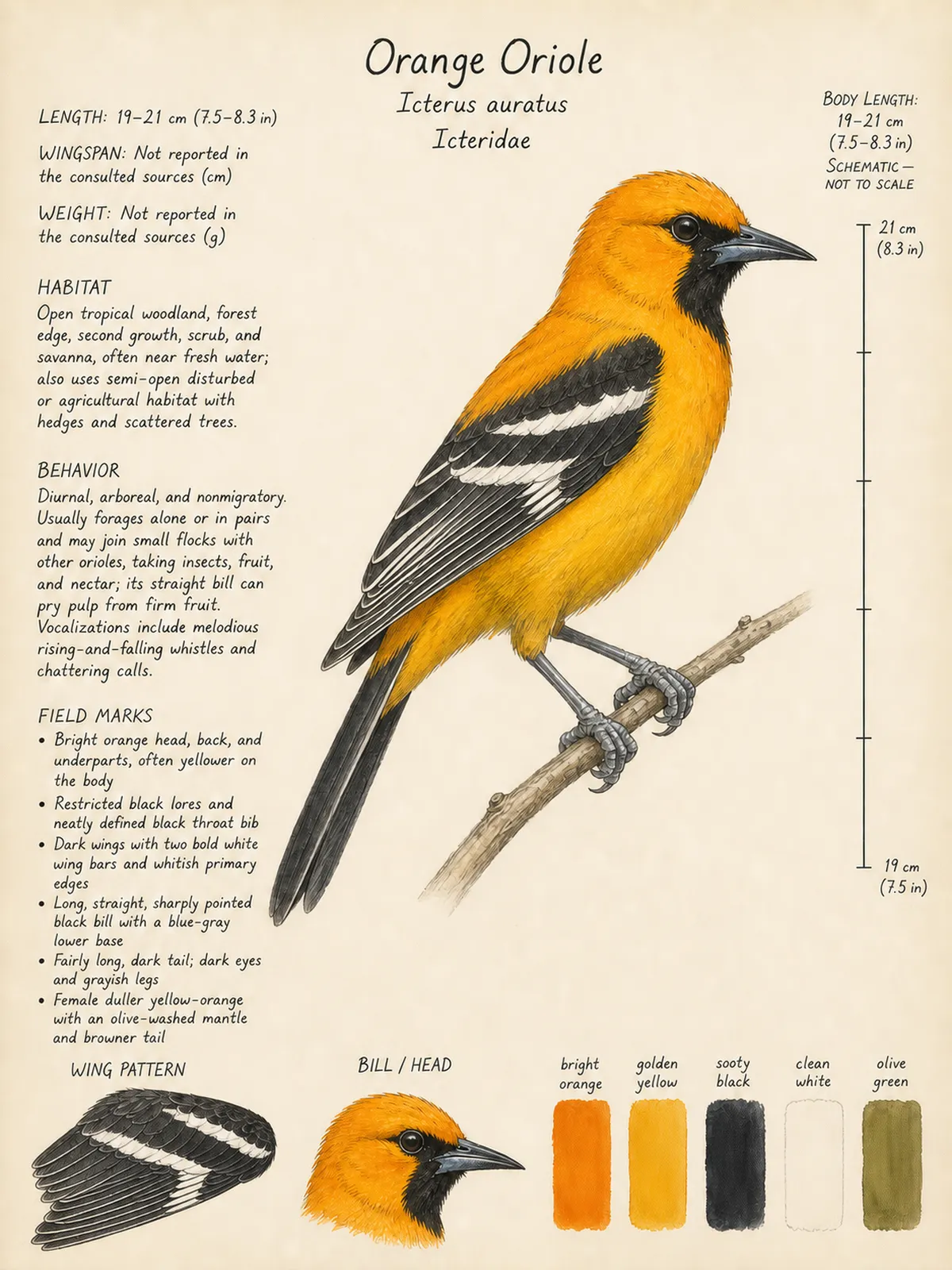
Orange Oriole
Icterus auratus
Icteridae · Taxon 9332
| Length | 19–21 cm (7.5–8.3 in) |
| Wingspan | Not reported in the consulted sources (cm) |
| Weight | Not reported in the consulted sources (g) |
Field marks
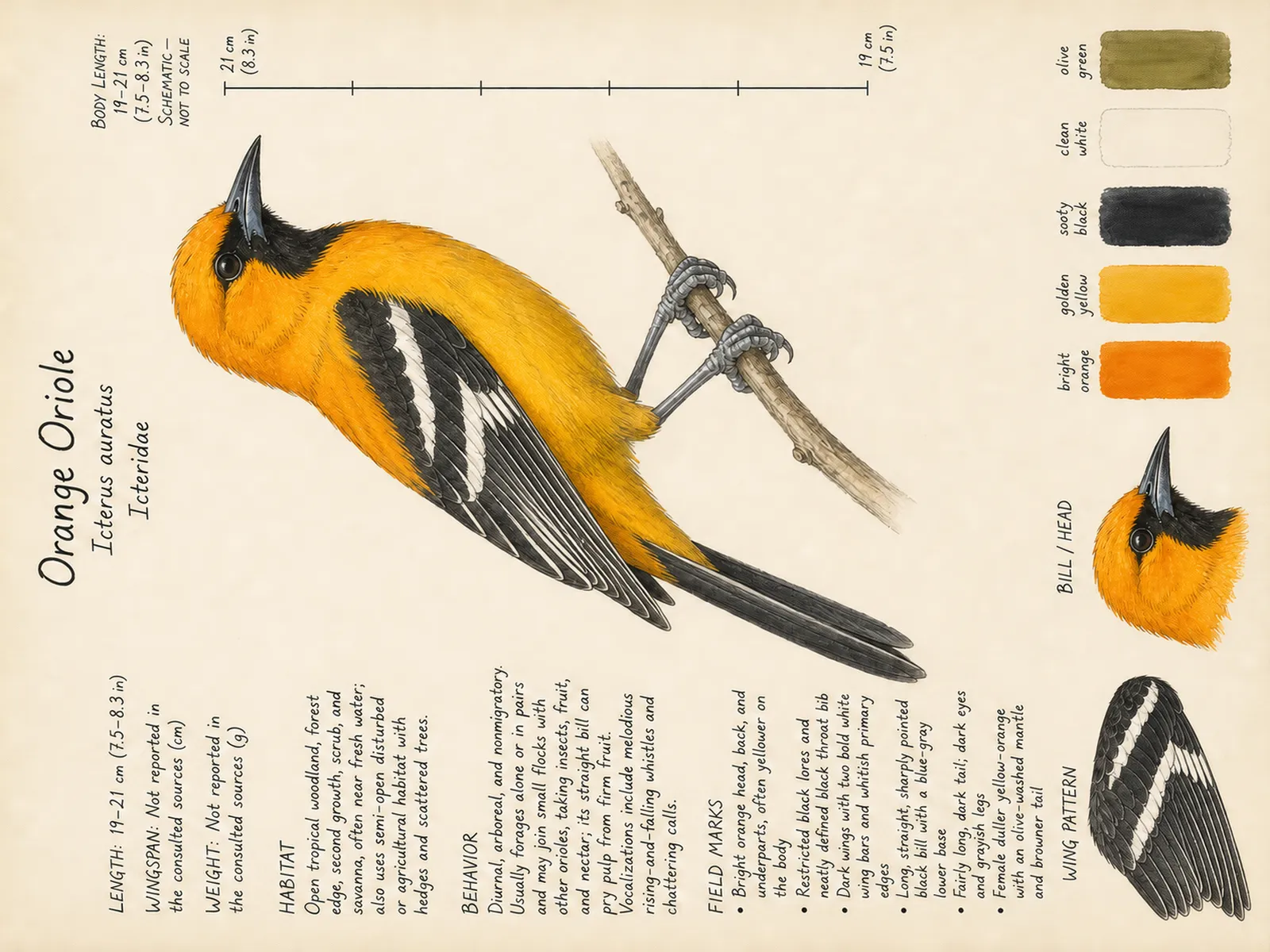
- Bright orange head, back, and underparts, often yellower on the body
- Restricted black lores and neatly defined black throat bib
- Dark wings with two bold white wing bars and whitish primary edges
- Long, straight, sharply pointed black bill with a blue-gray lower base
- Fairly long, dark tail; dark eyes and grayish legs
- Female duller yellow-orange with an olive-washed mantle and browner tail
HabitatOpen tropical woodland, forest edge, second growth, scrub, and savanna, often near fresh water; also uses semi-open disturbed or agricultural habitat with hedges and scattered trees.
BehaviorDiurnal, arboreal, and nonmigratory. Usually forages alone or in pairs and may join small flocks with other orioles, taking insects, fruit, and nectar; its straight bill can pry pulp from firm fruit. Vocalizations include melodious rising-and-falling whistles and chattering calls.
Palette
bright orangegolden yellowsooty blackclean whiteolive green