Pl. CLXXV
The Birds · Plate CLXXV
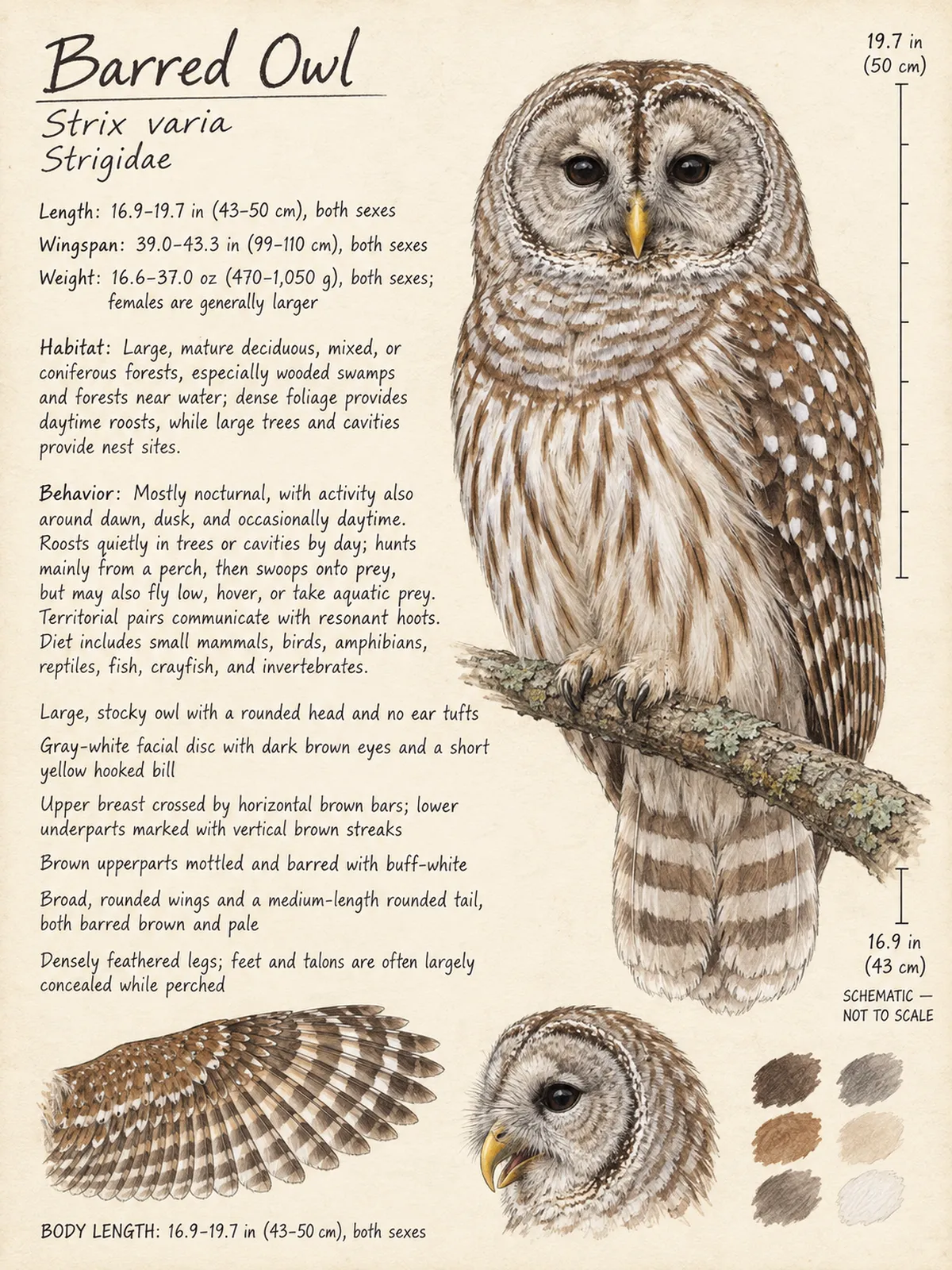
Barred Owl
Strix varia
Strigidae · Taxon 19893
| Length | 16.9–19.7 in (43–50 cm), both sexes |
| Wingspan | 39.0–43.3 in (99–110 cm), both sexes |
| Weight | 16.6–37.0 oz (470–1,050 g), both sexes; females are generally larger |
Field marks
- Large, stocky owl with a rounded head and no ear tufts
- Gray-white facial disc with dark brown eyes and a short yellow hooked bill
- Upper breast crossed by horizontal brown bars; lower underparts marked with vertical brown streaks
- Brown upperparts mottled and barred with buff-white
- Broad, rounded wings and a medium-length rounded tail, both barred brown and pale
- Densely feathered legs; feet and talons are often largely concealed while perched
HabitatLarge, mature deciduous, mixed, or coniferous forests, especially wooded swamps and forests near water; dense foliage provides daytime roosts, while large trees and cavities provide nest sites.
BehaviorMostly nocturnal, with activity also around dawn, dusk, and occasionally daytime. Roosts quietly in trees or cavities by day; hunts mainly from a perch, then swoops onto prey, but may also fly low, hover, or take aquatic prey. Territorial pairs communicate with resonant hoots. Diet includes small mammals, birds, amphibians, reptiles, fish, crayfish, and invertebrates.
Palette
warm browngray-brownbuff-whitedark brownbill yellow